Local Therapy for Addressing School Behaviors in Children

When school becomes overwhelming, behavioral support can help your child feel understood and supported. Need a local therapist with experience? We can help!

Locations: Henrietta, Victor, Pittsford, Penfield & Telehealth Option Available

NOW ACCEPTING NEW PATIENTS – CALL OR REQUEST AN APPOINTMENT ONLINE

Your Child’s School Problems Can Cause Mixed Emotions

When your child struggles at school, it can stir up a range of emotions as a parent. You may feel worried, frustrated, confused, or even unsure of what to do next. It’s common to question whether these challenges are “just a phase” or signs of something deeper.

Watching your child feel anxious, act out, or lose confidence can take an emotional toll on the entire family. These reactions are understandable, and you are not alone in feeling this way. School-related struggles can be complex, and they rarely have a simple cause.

With the right guidance and support, however, families can better understand what’s happening and take thoughtful steps toward helping their child feel more secure and successful again.

From Renew Hope and Healing: A woman sits beside a boy at a kitchen table, speaking to him about school behaviors as he looks down, with a backpack on the floor and breakfast dishes nearby.

What Our Clients Are Saying

Leonela Stull
They are very compassionate, they listen and try to match you up with someone within the group suitable to your needs. It only took an email and I was called the next day, had an appointment the following week. They are so amazing that my daughter will be going here as well. I was referred by a psychiatrist and I have never felt such consideration and openly welcome embrace to help those who are seeking help. I have nothing but great things to say!
Nikki Rose
This is a great place for counseling, the staff are very friendly and flexible with my schedule, sometimes have to do virtual appointments when things come up and no issues, the waiting room is beautiful and relaxing and I love my therapist Crystal, she's exactly who I was hoping to work with, thank you!!
Aimee Ruscio
Brooke is an amazing therapist for my son. Like an angel sent from above. So down to earth, listens well and so in tune with his feelings.
Jena Caramazza
A wonderful practice to find healing and growth as well as support and validation. Thankful beyond words and always always recommending.
Jim Spurgeon
Very impressed with Jeff Young. He is very conscientious in helping his patients deal with or overcome whatever conditions they might be seeing him for.
Joe Varga
Great people! Helpful reception and caring therapists.
From Renew Hope and Healing: A woman and a young boy sit on the floor in a bright room, playing with wooden blocks, smiling at each other as they practice positive school behaviors together.

How Counseling for School Behavior Can Help

Youth mental health counseling provides children with a safe, supportive space to understand their emotions, develop healthier responses, and build skills that support success at school and at home. Through evidence-based approaches, children start to feel more confident in their ability to cope with everyday demands.

Counseling can help your child:

  • Express emotions in healthy, age-appropriate ways
  • Develop stronger coping and problem-solving skills
  • Improve social interactions and classroom behavior
  • Reduce anxiety, aggression, or emotional withdrawal

Is Mental Health Counseling Right for Your Child?

Many parents wonder whether counseling is truly necessary or if their child’s challenges will resolve on their own. Occasional stress or behavior changes are a normal part of growing up, but ongoing patterns, such as persistent anxiety, emotional outbursts, or difficulty at school, may signal the need for additional support.

Early intervention can help children build skills before challenges become more overwhelming. Choosing counseling for your child is a thoughtful, collaborative decision focused on understanding your child’s needs and determining the best path forward together.

From Renew Hope and Healing: A woman discusses school behaviors with a mother and daughter sitting on bean bags in a bright, cozy living room filled with books and plants.
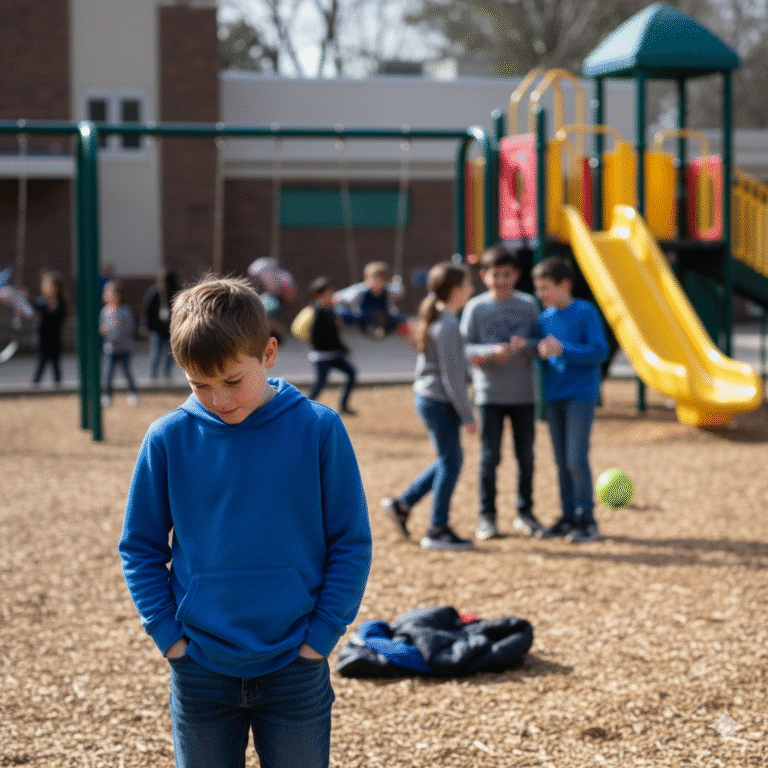
From Renew Hope and Healing: A boy in a blue hoodie stands alone on a playground, quietly observing school behaviors as other children play and interact near swings and a slide in the background.

Understanding Difficult School Behaviors in Children

School behaviors can show up in many ways, and they often look different from one child to another. These behaviors may include emotional, social, or physical responses to stress that interfere with learning or relationships at school.

It’s important to remember that behaviors are a form of communication, not a reflection of who your child is or their potential. Children may act out, shut down, or avoid school when they don’t yet have the words or skills to express what they’re feeling. Understanding the “why” behind these behaviors is the first step toward positive change.

Common school behavior concerns may include:

  • Anxiety or school avoidance
  • Disruptive or aggressive behaviors
  • Withdrawal or emotional shutdown
  • Difficulty with peers or authority figures
  • Physical complaints, such as headaches or stomachaches, linked to stress

What to Expect During Your First Session

Your child’s first counseling session is designed to feel welcoming and supportive. The initial visit focuses on getting to know your child and understanding what has been happening at school and at home. The therapist will take time to build rapport, help your child feel safe, and listen carefully to both your concerns and your child’s experiences.

Parents or caregivers play an important role in this process, and your involvement helps ensure that treatment is collaborative and well-informed. During your first session to address school behaviors through counseling, you can expect:

  • A review of your child’s concerns and background
  • Observation of emotional and behavioral patterns
  • Discussion of goals and recommended next steps
  • An overview of the therapeutic approach being considered
  • Time for parents to ask questions and share insights
From Renew Hope and Healing: A woman and a man sit facing each other and talking in a living room, while a young girl in the foreground draws on paper, practicing positive school behaviors like focus and creativity.
From Renew Hope and Healing: An adult and a child sit on a sofa, looking at a piece of paper together—possibly discussing student behavior. A blue backpack rests on the floor nearby. A timestamp is visible in the lower right corner.

How to Maximize the Benefits of Behavioral Counseling for Children

Counseling is most effective when parents and caregivers are active partners in the process. Consistency between sessions and home helps children practice new skills and feel supported as they grow. Open communication with your child’s therapist allows concerns to be addressed early and progress to be understood.

Reinforcing strategies learned in counseling and collaborating with your child’s school, when appropriate, can further strengthen progress and promote lasting behavioral improvements.

School Behavior Therapist for Children in Rochester, Victor, and the Surrounding Area

Renew Hope and Healing’s team of experienced clinicians provide child-centered, evidence-based mental health care for children across greater Rochester NY and the surrounding communities.

From Renew Hope and Healing: An adult and a child sit together indoors, looking at a drawing featuring a swirl, a heart, and an upward arrow. The adult has an arm around the child in a supportive gesture, encouraging positive school behaviors.

Cognitive Behavioral Therapy (CBT)

CBT helps children understand how thoughts, feelings, and behaviors are connected. Through practical strategies, children learn emotional regulation, problem-solving skills, and healthier ways to respond to challenges at school and home.

From Renew Hope and Healing: An adult and a child sit on the floor in a well-lit room, building a structure with wooden blocks—a scene that highlights positive student behavior. The date and time are shown in the lower right corner.

Play Therapy

Play therapy allows children to express thoughts and emotions in developmentally appropriate ways. Through guided play, children can process experiences, build emotional awareness, and strengthen communication when words are difficult to find.

From Renew Hope and Healing: A woman and a girl meditating on a pillow, practicing mindfulness to support positive student behavior and classroom management.

Mindfulness & Relaxation Skills

Mindfulness and relaxation techniques help children calm their nervous systems and manage stress. These skills support focus, emotional balance, and self-awareness, helping children respond more thoughtfully to school and social pressures.

From Renew Hope and Healing: Two women sit on a couch having a conversation while a young girl, focused on her notebook and practicing positive school behaviors, writes or draws at the end of the couch in a bright, tidy room.

Parent-Child Interaction Therapy (PCIT)

PCIT is a structured, evidence-based therapy for young children and caregivers. Through live coaching, parents learn effective strategies to strengthen relationships, improve compliance, and reduce challenging behaviors with confidence and consistency.

From Renew Hope and Healing: Two adults sit at a table reviewing papers while a young girl, practicing positive school behaviors, writes in a notebook on a bean bag chair nearby in a classroom setting.

Family Involvement & School Collaboration

Successful treatment often includes collaboration beyond the therapy room. We work with families and, when appropriate, school staff to ensure consistent support across environments to promote meaningful, consistent progress for children.

From Renew Hope and Healing: Two women sit in chairs talking to a young girl in a light blue room, possibly discussing school behaviors during a counseling or educational session.

Telehealth Options & In-Person Flexibility

We offer both in-person counseling and secure telehealth options to meet families where they are. Flexible scheduling and multiple locations make accessing care more convenient for busy families.

Insurance & Billing Made Simple

Getting help for your child shouldn’t be complicated. Our team is here to help you understand coverage and costs associated with accessing care.

We accept most major insurances, including Aetna, Excellus/Blue Cross Blue Shield, MVP, Fidelis, Child Health Plus, and UnitedHealthcare/Optum. Medicaid managed care plans (Excellus, MVP) are also accepted.

Not covered? Ask us about self-pay options and out-of-network reimbursement with a Superbill.

Email billing@renewhopeandhealing.com with any questions. We’re happy to help.

Start Today: Get Local School Behavioral Help for Your Child

Early support for your child’s school behavior challenges can make a meaningful difference in their lives. Help is available to guide your child and your family forward.

Visit us in Henrietta, Victor, Pittsford, or Penfield.

Call 585-398-8835 or request an appointment online.